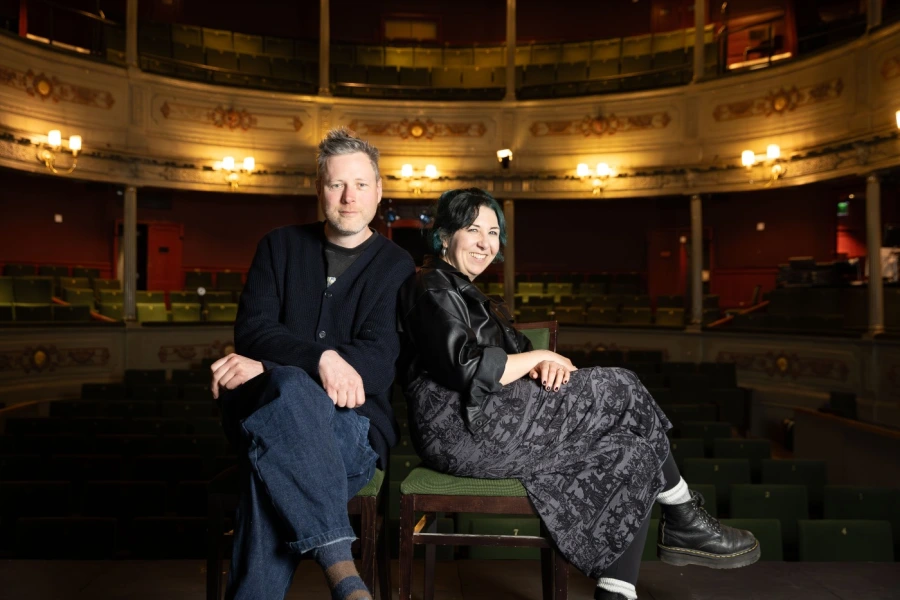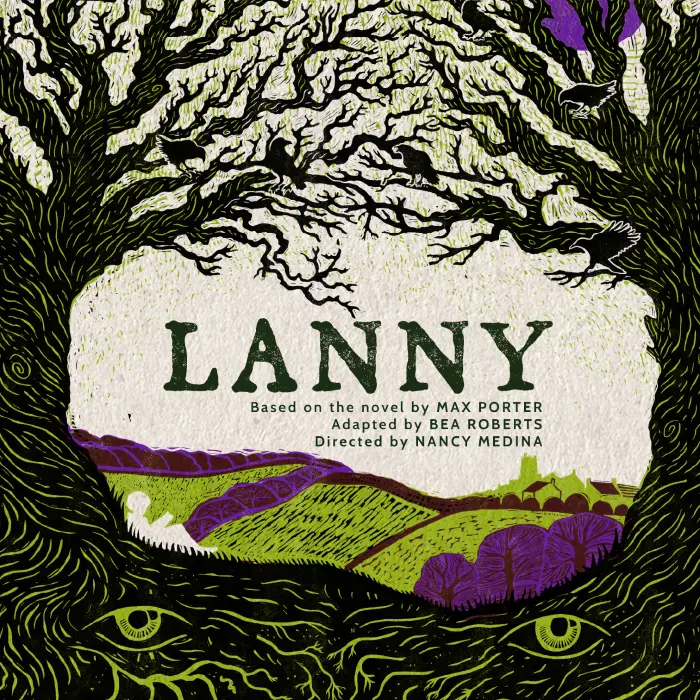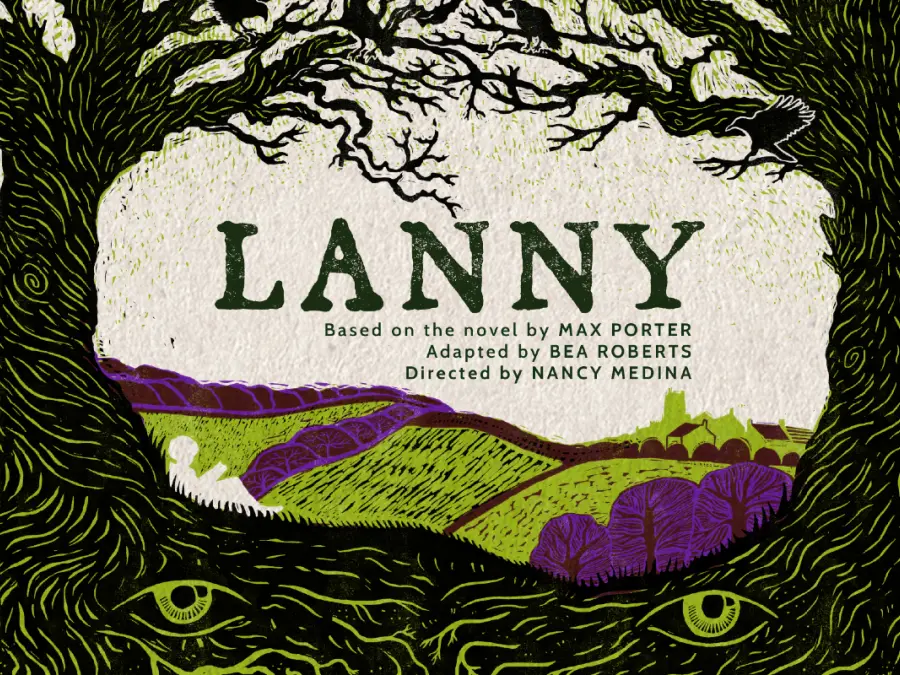
Bristol Old Vic and acclaimed southwest playwright Bea Roberts are bringing Max Porter’s story of a uniquely gifted boy who vanishes from an English commuter village watched over by an ancient mythic spirit to the stage this autumn. Deeply rooted in the sounds, accents and textures of the southwest, the theatrical adaptation of Porter’s 2019 novel Lanny was developed with a local creative team that includes Bristol Old Vic artistic director Nancy Medina, set designer Rebecca Jane Wood (Outlier, Badgers), composer Dom Coyote (War Horse), movement director Dan Canham (A Monster Calls).
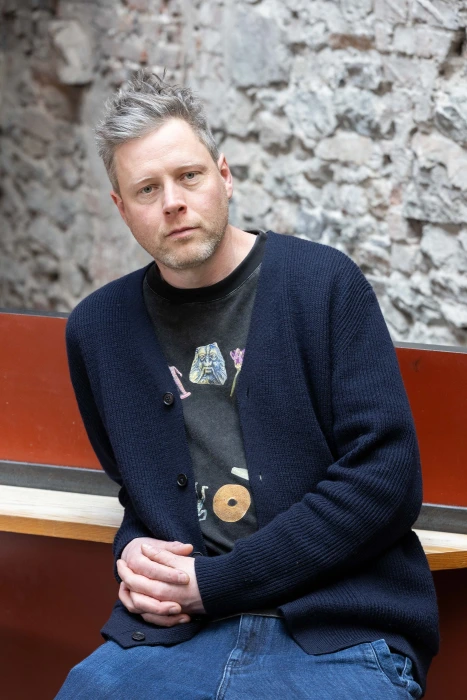
“I wrote the book,” Porter explains. “What the Bristol Old Vic has done is just have me pop my head in the door whenever I want to be nosy. As a total nerd for collaboration, I have a sense of immense gratitude and excitement.”
Ahead of its theatrical run from 16 October to 7 November, we caught up with the Bath-based novelist behind Grief Is the Thing With Feathers and Shy on the day the cast was announced to chat about trusting other creatives with his work, balancing heartbreak with humour, and the art of turning a story into a living listening device.
As we chat, they’ve just announced the cast for Lanny…
I’m so pumped about the casting. The two young local kids sharing the role of Lanny have never acted professionally before. Imagine the family WhatsApp groups right now: “She’s got a part at the Bristol Old Vic!” Having actors who haven’t been moulded by formal training feels very organic, very Lanny. If they were standing there thinking, “Oh, this is how I did it in Harry Potter,” it would be a disaster.
What made you trust Bea Roberts to adapt Lanny’s world for the stage?
She’s easy to trust, and her sense of humour is so spot-on for this project. To see Bea translate the vagueness of the book’s commuter village into something concrete has been brilliant – right down to the syntax and the rhythms of the language. Making that southwest-specific has made so much sense, but it’s also created something entirely new, which I’m grateful for. I don’t want any adaptation of my work to have a slavish obedience to the original. I want it to breathe and feel differently.
It’s not the first time your work has been adapted for stage or screen. Is there a thrill in handing over creative control?
I’m big into the trust economy. The first thing I go on is energy: what are their jokes like? Are they genuinely into it? Every person on this project completely gets it. When Ben at the Old Vic first had the idea to develop it, I met him and thought, “I trust this person not just with Lanny, but with my life!”… The thing about trust is that it tends to repay itself. The more openheartedly you give people your work, the better the results. If you police other people’s interpretations or coerce them into obeying the original, it backfires. From the get-go, my advice was just: “Make it wild!”
Grief and loss are recurring themes in your work, but you also find absurdity, humour and beauty in them. How do you balance the light and dark?
Life is incredibly challenging and heartbreaking, extremely funny at the same moment it is impossibly devastating. But we are all polyphonic beings, constantly splitting ourselves. Your children can be the most precious things in the world – and you lack the vocabulary to express that – and yet they are also really, really f***ing annoying. That constant, maddening multitasking has a specific texture I want to capture accurately.
And is that what Lanny is about, at its core?
Lanny is essentially a listening device. You can be in deep despair while simultaneously hallucinating strange mythic beasts in your head, feeling madly heartbroken about the state of the world, walking down the street in a protest march, and then realising you have to call Vodafone!
Dead Papa Toothwort’s mythical character [in Lanny] listens to modern noise and human chatter. If you turned him loose in a Somerset pub or on King Street in Bristol today, what would he hear?
He’s especially fascinated by people who possess an old spirit. That’s why he’s drawn to Lanny. If you’ve lived underneath a country for a long time, you’re overly familiar with domestic bickering, agricultural language and political corruption. But the charming things would excite him most: eccentricity and people who believe in art. When he sees an unexpected friendship bloom between an old, lonely artist and a young newcomer to the village, something sparks. It’s a pure human encounter outside of class, gender, politics or race. Something magic happens in the making of art, and he finds that alluring.
The southwest has pockets of ancient countryside alongside modern commuter culture. Does living in Bath, surrounded by this, feed into your creative process?
Always. What’s so cool about this production is that almost the entire cast is local to the southwest. It doesn’t mean everyone is nine generations deep in Somerset, but one person’s Bristol is completely different from another’s, and that raises the question: whose folklore is it? Real folklore can’t be bottled. It has to keep moving. Bristol is a city constantly in dialogue with itself. You have a massive anti-fascist, progressive movement alongside alarming far-right activity. I like plugging into that tension because it feels deeply relevant to how we live now. Who do we think we are, and what do we get to call home? It’s a brilliant time for Lanny to be staged, especially with the current resurgence in folk traditions.
What do you hope audiences feel when they walk home after the show?
My aim with Lanny is that the things that frighten or unnerve you eventually become the things that move you. Maybe it clarifies that you want to go home and hug the people you love. Or maybe it encourages you to stop and talk to someone on the street you might otherwise walk past. Lanny is about that tangled connectedness between us all. I hope people leave feeling awake to the sense that the song carries on. The song you’re hearing was heard a thousand years ago and will be heard in a thousand years. Language changes, politics change and the earth changes, but the note is still being sung. If people leave the theatre just feeling a bit more alive, that would be brilliant.