As Bristol’s genre-agnostic, barrier-breaking Paraorchestra prepare for two special performances this August, Charles Hazlewood reveals how the orchestra’s music continues to fascinate and inspire him
So closely associated is Charles Hazlewood with Bristol that it comes as something of a shock to learn he now lives far further south (and west), in North Cornwall. “It has done so much to remake me,” he says, “the rawness of the landscape and the natural elements. The wind is horizontal, the rain is horizontal.” The Granite Kingdom has become “home”.
There have been other changes in Hazlewood’s life, too. In recent years, his marriage ended “for all the right reasons… we had fulfilled our contract to each other”. After the pandemic, he reassessed his working life. “Up until Covid, I was conducting about 50 orchestras worldwide, and had been for 35 years,” he says. “It was just so nice to sit down and quietly send each one a letter saying, ‘Thanks, guys, it’s been great, but I’m out now.’”
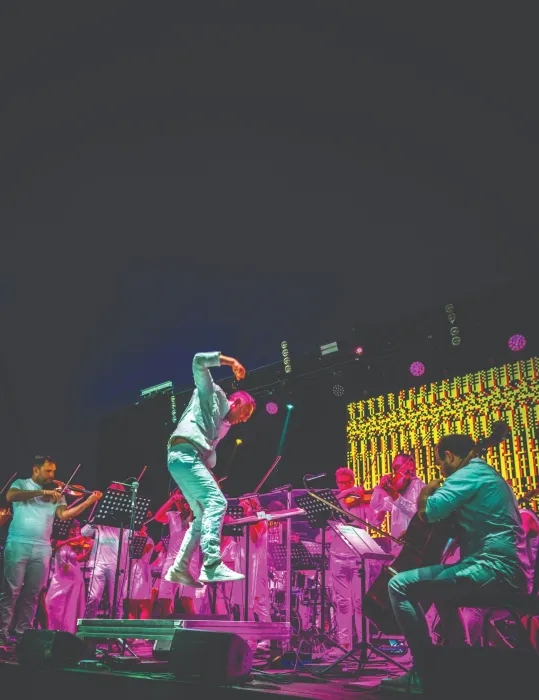
These aren’t the words of someone heading into retirement. Rather, Hazlewood wanted to focus on Paraorchestra, the Bristol-based ensemble of disabled and non-disabled musicians that he founded in 2011. “I spent 35-40 years trying to bring about innovation in a very innovation-averse industry,” he says. “Now I have an orchestra called Paraorchestra, who are world-class and up for every paradigm shift, who are excited by every change of nuance. There’s nothing they don’t want to do. If you compare that with orchestras that only want to play Bruckner, guess which way I wanted to go?”
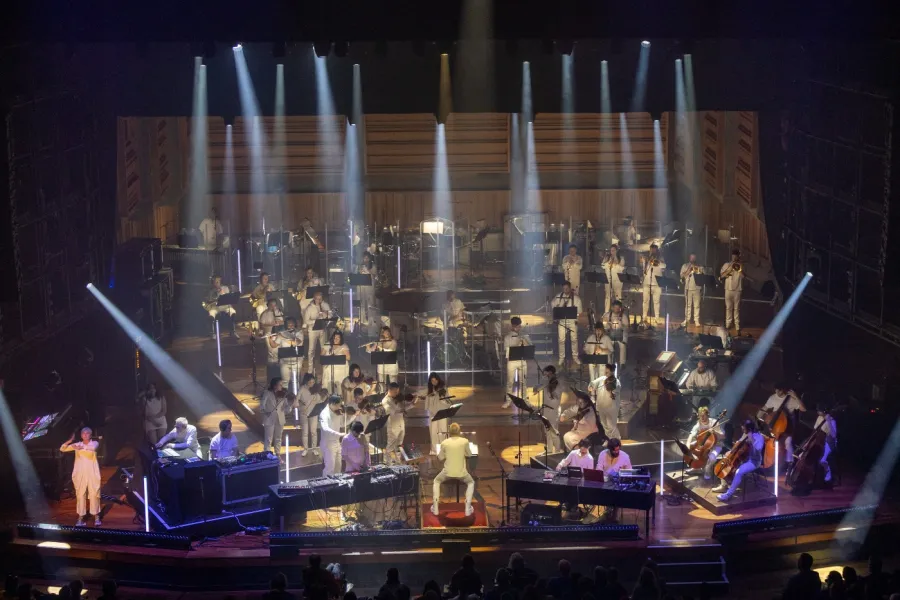
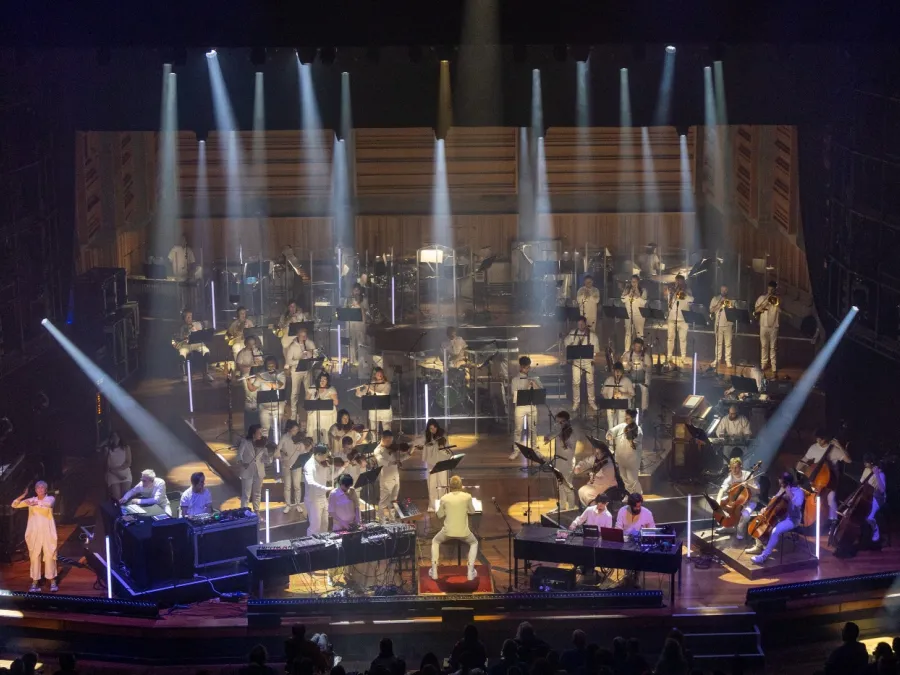
This summer, Hazlewood and Paraorchestra will twice play on home turf. On 7 August, to celebrate Steve Reich’s 90th birthday, Paraorchestra will perform the American minimalist’s Music for 18 Musicians for the BBC Proms at Bristol Beacon. Reich’s piece received its full premiere 50 years ago. Then working as a cabbie, the composer paid out of his own pocket to hire Manhattan’s Town Hall theatre. “In that moment, his life changed and the world changed, actually, because this idea of the transcendent, transcendental power of repetition, the idea of systems music, was born and launched onto a global stage,” Hazlewood says.
For the BBC Proms performance, the musicians will be on plinths distributed across the Beacon. The audience will be able to walk around and “go wherever their heart and their curiosity takes them”. They may even see musicians suffering. “It punches musicians for six,” Hazlewood says of Reich’s intricate, fast-moving cycles of sound. “Wind players, their lips get fucked, and then pianists, their nails fall off – it’s crazy hard to do.”
One reason Hazlewood hit on this approach may lie in a time when, aged six, his mum took him to see an orchestra rehearse “and then buggered off”. A lonely experience became transformative when the conductor invited Hazlewood to sit with the musicians. “Nothing prepared me for literally a life-changing experience of being caught in the middle of this power shower of harmonic, rhythmic and melodic information just coalescing in thin air around my head.”
Another touchpoint for the Reich concert is a rave, in that the approach breaks down hierarchies and the mix changes depending on where you are. The repetitions of Reich, says Hazlewood, a huge techno fan, are deep in the DNA of electronic dance music.
So too is the music of Kraftwerk. On 29 August, Paraorchestra will revive Kraftwerk: Re:Werk, a reimagining of the German synth-pop and proto-techno legends’ Trans-Europe Express LP, at Forwards Festival. Arranged by Charlotte Harding and Lloyd Coleman, the performance follows Fabio & Grooverider’s symphonic renditions of rave and drum ’n’ bass classics with the Outlook Orchestra at last year’s festival in bringing classical-adjacent music to the festival stage, but its debut was at another adventurous Bristol event: Simple Things in 2017, before an audience of young music fans.
“They were a bit like, ‘What the fuck? It’s an orchestra,’” remembers Hazlewood, who first heard the original album as a teenager. “We were like, ‘What the fuck, the hall is full of very young people. What’s going to happen? Will they like us? Will they boo us? Will they just get bored?’” In the event, turning an orchestra into a kind of giant synthesiser to perform Trans-Europe Express at a concert held so close to the Brexit vote was a “coming together”.
Looking ahead, Hazlewood has multiple projects in “R&D”. All this activity befits a man who is famously restless. In 2023, I interviewed him in the courtyard of Bristol’s Hotel Du Vin. When he wasn’t vaping, eating, drinking or talking, he was pacing. Meantime, the doggy companion of electronic artist Surgeons Girl, Hazlewood’s musical collaborator at the time, indulged in fits of barking. The staff clearly knew Hazlewood, which was probably just as well.
Hazlewood has often mentioned ADHD in interviews. Which begs a question. Is there a sense he’s now more able to work solely with Paraorchestra because he’s learnt to manage his condition? He’s not sure, but says he can maintain focus when something is interesting – and the Paraorchestra is “vividly, unendingly interesting” to him.
“I spent so much of my life hitherto trying to fit in,” he adds. “When I went to Oxford [in the 1980s], I looked around me at these shiny people on top of everything and so impressive. In reality, they were all melting down inside, they were every bit as insecure and status-anxious as I was but not giving off that impression. Indeed, I’m sure I came across as smug and self-satisfied. The reality is the world is dying inside because people are all trying so hard not to let their insecurities show.”
In contrast, the disabled musicians of Paraorchestra are used to living with vulnerability and a reliance on others. This in turn has liberated Hazlewood. “That is something I give great thanks for,” he says. “That’s my tribe, that’s where I feel at home.”
Forthcoming Paraorchestra Gigs here