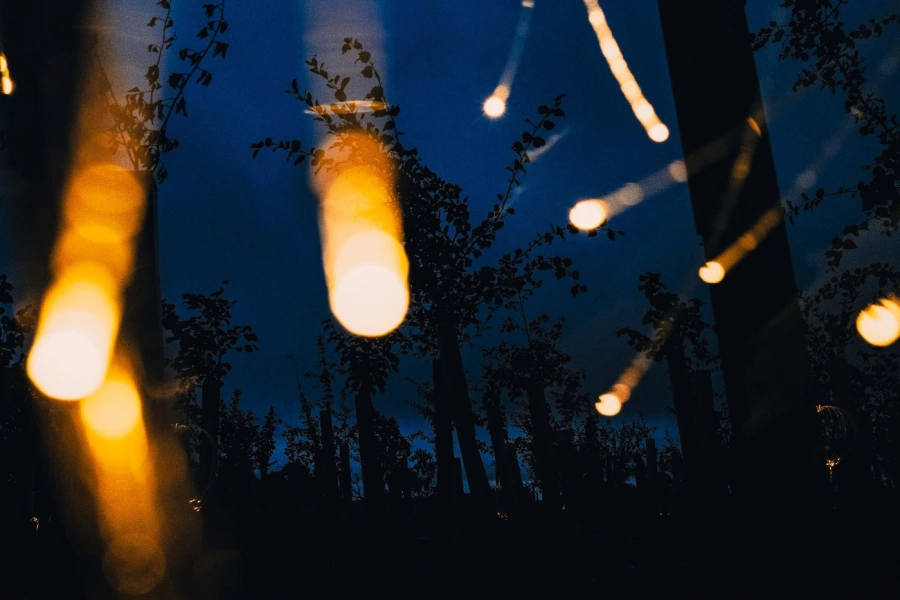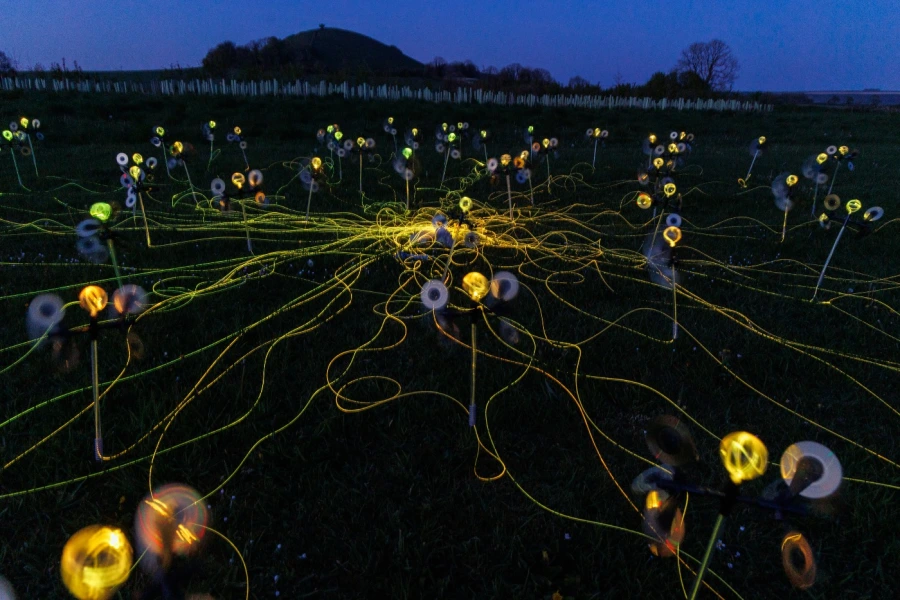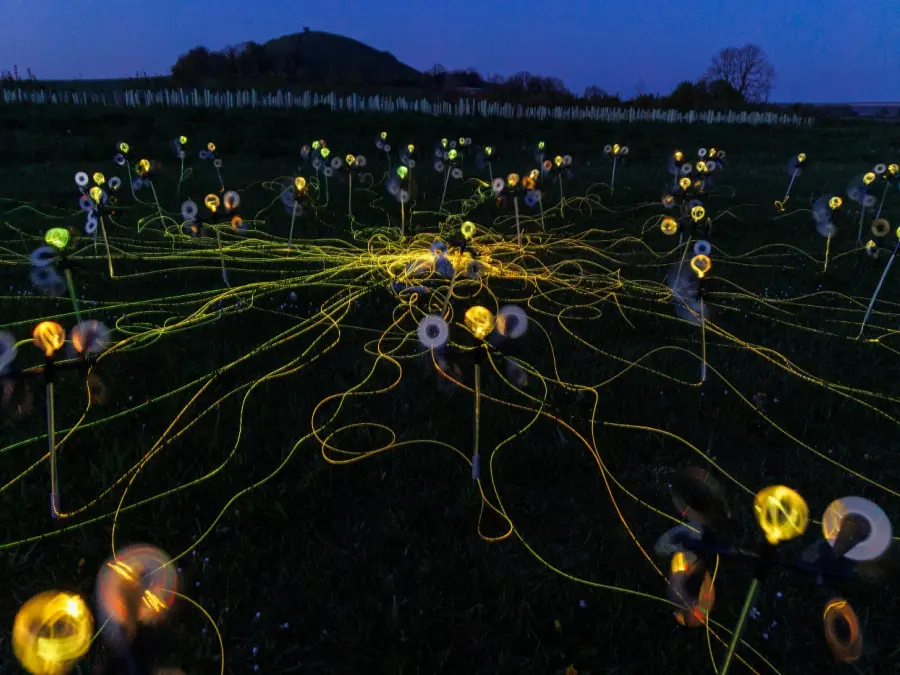
This autumn, a Wiltshire woodland will hush and glow with the world premiere of a luminous and profound new installation by internationally acclaimed British light artist Bruce Munro. What art lovers might not expect, however, is the woodland’s setting – in the grounds of the Winsley hospice run by Dorothy House, the charity offering free palliative and end-of-life care across Bath and North East Somerset.
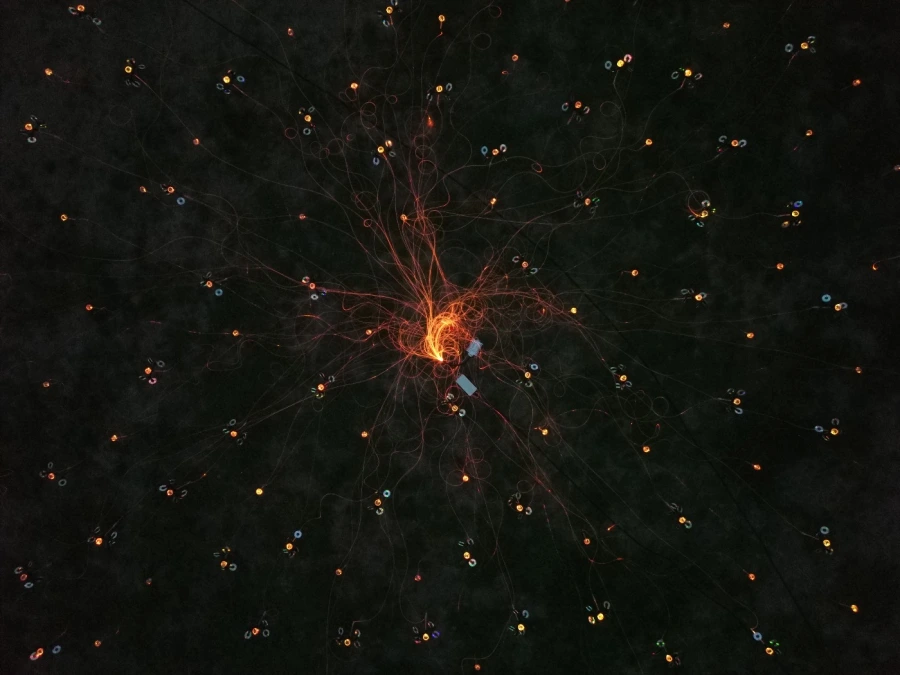
The immersive exhibit, Moments of Light, invites visitors to wander among thousands of illuminated forms glowing in the darkness, a constellation of light that seems to breathe with the landscape and speak to the enduring bonds we share with those we love, even after death. These fields, rivers and windmills of light will join the hospice’s permanent Firefly Woods installation, another collaboration with Munro, in which creativity and nature come together to create a space for reflection. Each Firefly is made up of tiny separate lights, which can be dedicated to the life of someone special and shine alongside the other lights in their memory.
By bringing together art, nature and hospice care, these installations challenge the clinical environments traditionally associated with end-of-life care. As he creates light in the darkness, Munro, famed for his monumental, experiential artworks inspired largely by his interest in shared human experience, hopes that Moments of Light “will offer visitors a space to breathe, reflect and feel held within an environment shaped by care, beauty and nature”.
Three million people in the UK are bereaved every year, but one in three adults say they don’t know how to start a conversation after a bereavement. We are ill-equipped, it seems, to deal with the end of life and what comes next. During Covid, British society was faced with its own mortality at close quarters like never before, with the nation’s death rates streamed into our homes on a nightly basis. In response, a wave of events and communities began to pop up or find new relevance.
The Good Grief Festival launched in 2020, broadcasting virtually from the University of Bristol, with the aim of providing a platform for people to reflect together on the subjects of grief, death and end-of-life. “We believe there’s no single right way into a conversation about grief, so we aim to offer something for everyone,” festival producer Dr Rachel Hare says. “We use creativity and performance to make difficult subjects feel approachable. Granny Jackson’s Dead, for instance, staged an Irish wake inside a real Weston house to show family members’ different responses to death.”
The festival programmers continually find themselves drawn to stories of disenfranchised grief – losses that don’t get the recognition or support they deserve, and are therefore relegated to the margins of conversation. “These can be deaths that are misunderstood or stigmatised, such as miscarriage, suicide or overdose, or the death of relationships that society can overlook, including those with same-sex partners, siblings, friends or pets. When a loss isn’t acknowledged, people can end up grieving in silence. That isolation often compounds the loss itself.” The Good Grief Festival returns to Weston 15-18 October, with its usual mix of events and activities. Visitors can expect nature walks, street theatre, a Memento Mori Disco and a discussion on different religious perspectives on death and remembrance.
Adapted globally from Swiss sociologist Bernard Crettaz’s 2004 model, local Death Cafes offer a different approach. Integrative counsellor Albert Sobilo runs a regular Death Cafe at Bath Central Library with Molly Conisbee, a bereavement counsellor and social historian. Despite their professional backgrounds, the pair don’t treat the Cafe as a grief support group or counselling session. “Our role is to hold the space gently, make sure it stays respectful and inclusive, and be available if anyone needs support afterwards,” Sobilo explains. “Targeted bereavement support already exists, and it serves a specific need. A Death Cafe does something different: it normalises talking about mortality before a crisis forces the conversation. It builds familiarity and develops a language, so people aren’t starting from zero.” It’s an approach that continues to unearth deep emotions, he says. “People are often surprised by how much relief there is simply in saying the unsaid thing to people who aren’t going to flinch.”
Similar Death Cafes are held at Arnos Vale in Bristol, where people can share their thoughts and experiences over tea and cake in the uniquely peaceful setting of the Victorian garden cemetery. At Christmas, Arnos Vale hosts an annual memorial service in its Anglican Chapel, giving people the opportunity to remember those they have lost and share a moment of peace with others, accompanied by choirs and commemorative candles.
Isolation can be particularly stark for young people whose peers have rarely experienced profound loss. Let’s Talk About Loss was set up to address this challenge for those aged 18-35, who have experienced the death of someone close to them. Founded in 2018 by Beth French, following the death of her mother, the charity holds meet-ups across the southwest, and has recently launched a partnership with Bristol’s Arnolfini. “Beth had found she was too old for many children’s grief charities, but was the youngest in the room by quite a few decades at adult grief groups,” charity lead Catrin Beynon explains. “Our meet-ups are not formal support groups or counselling sessions. There are no hard chairs, no sitting in circles, and while each session touches on grief, there’s no talking about the sad stuff unless you want to. The Bristol group always tries to end with members sharing a memory of their person.” They often pair these meetings with an activity – a picnic, pottery class or, at the Arnolfini, VIP tours of exhibitions that may touch on themes of life, death and grief.
Art and culture can play a key role in the grieving process, providing a tangible language for complex emotions when words fail – and witnessing shared experience in what can be an isolating time. Bristol-based writer and performer Malaika Kegoda’s poetry reflects some of the sudden and unexpected bereavement she has experienced in her life, grappling with transition, loss and rebirth. Fresh from a successful Bristol Old Vic run of her new show, Badgers – a folk tale about a podcaster with a dying mother and a stalling career – she describes her approach to these topics. “I love to find metaphor and new ways to explore these universal feelings, but I also feel like there is an incredible power in speaking very plainly about what has happened,” she says. Audiences connect with her stories, sharing personal responses with her. “Writing on these themes can help people feel less alone, and more permitted to speak about how they’re feeling,” she says.
She believes there’s power, too, in drawing attention to those she has lost, particularly when their deaths intersect with themes of social justice and poverty. “As well as honouring those people, I feel it’s important to hold to account the systems that failed them – and continue to fail others. When people die in these circumstances, sometimes we’re too polite, too English to discuss it, but I feel it’s important to do so.”
The intimate form of audio storytelling has opened up new avenues too, with podcasts like Griefcast and Where There’s a Will, There’s a Wake blending irreverent humour with personal reflections. Academics working in these fields have also stepped out of lecture halls to join the conversation. Dr Bethan Michael-Fox and Dr Renske Visser have hosted The Death Studies Podcast since 2021, sharing knowledge from people researching and working in the fields of death and bereavement, from academic researchers and funeral directors to therapists, disaster planners, novelists and musicians. “Time, place and individual experiences and beliefs make a massive difference to how people understand and experience loss,” Michael-Fox explains. “Death happens to everyone, but it’s impacted by location, wealth disparity, access to care, gender, faith and so much more.” The podcast unpacks the language surrounding mortality and areas often treated in black-and-white terms, such as suicide and assisted dying.
For two decades, the University of Bath’s Centre for Death & Society has researched the social and political contexts of dying, helping the public and policymakers understand the end of life. “We’ve seen incredible advances in life extension and pain management, which have changed how we approach end-of-life care,” says Kate Woodthorpe, a sociology professor and CDAS’s co-director. “Social media has changed how people connect online, but that’s very different from community support.” The centre also appears at public talks and has created an audio walk around Bath (cdaswalk.org).
NCT classes might exist for births, but there’s no such framework for those preparing for the deaths of loved ones. The hinterland between a death and a funeral is often a sea of admin and existential shock. Recognising a real need for immediate post-bereavement support, Bath-based director of The Good Funeral Guide, Isabel Russo, launched Liminal Time. Her day-long workshop takes people through 13 steps to help them anchor and prepare for when someone they love dies. Some religions and cultures have a clearly mapped grieving period – Jewish communities observe Shiva and Hindus have the tradition of Terahvin, structured seven-day and 13-day periods respectively – while countries like Mexico dedicate a national celebration to remembering loved ones in the form of Día de los Muertos. “In this country, however, we’re not death-literate,” Russo says. “We’re positively steered away from talking about death. How do we gain confidence to take back control?”
As well as the practical journey from death to ceremony, Russo is keen to look at the conversations that should take place before death. “There are the practical questions about funeral music or burial or cremation, but also questions of emotional legacy and relationship questions – what you enjoy most about your relationship and how you want to be remembered. We spend so much of our lives pretending death doesn’t exist. Liminal Time shows you that love doesn’t die with the person, but needs new means of expression to move forward.”
With more public conversation than ever, have our attitudes actually shifted? The consensus from those working on the front line of grief communications is a cautious yes – but there’s plenty of work still to do, particularly as the assisted dying bill faces scrutiny amid intense national debate.
“Grief and loss are more present in the media, and some people seem more willing to talk openly,” Dr Rachel Hare reflects. “But bereaved people tell us they still feel unsupported by their communities. That’s where the work still needs to happen.” Arnolfini engagement producer Eleanor Sanghara Gustard agrees: “There is an increasing willingness to talk more openly, but we still have a limited vocabulary for expressing, sharing and receiving grief. There’s real value in being able to create sanctuaries where people don’t have to have the ‘right’ words – they can talk, listen, make connections, spend time with art, or simply be present.” Kegoda emphasises the need for intersectionality in these conversations. “The stigma is easing, but more support is needed for certain kinds of grief – particularly for diasporic groups, gender non-conforming folk and the working class, who find it harder to access support. Death affects us all, so the public conversation must include us all.”
Whether it’s finding shared language through a podcast, a quiet cup of tea among strangers, or stepping into the hushed, breathing stillness of Bruce Munro’s Moments of Light installation, embedding these physical spaces and conversations into the fabric of our communities ensures that when grief inevitably touches us, we are better equipped to face it together.
A message from Dorothy House: Our vision as a Hospice is for a society where death is part of life. We believe every life is incredibly precious, and no-one should face death alone. By transforming attitudes to death and dying, we can create compassionate communities; together we can support everyone’s right to live a meaningful life and have a peaceful death. dorothyhouse.org.uk