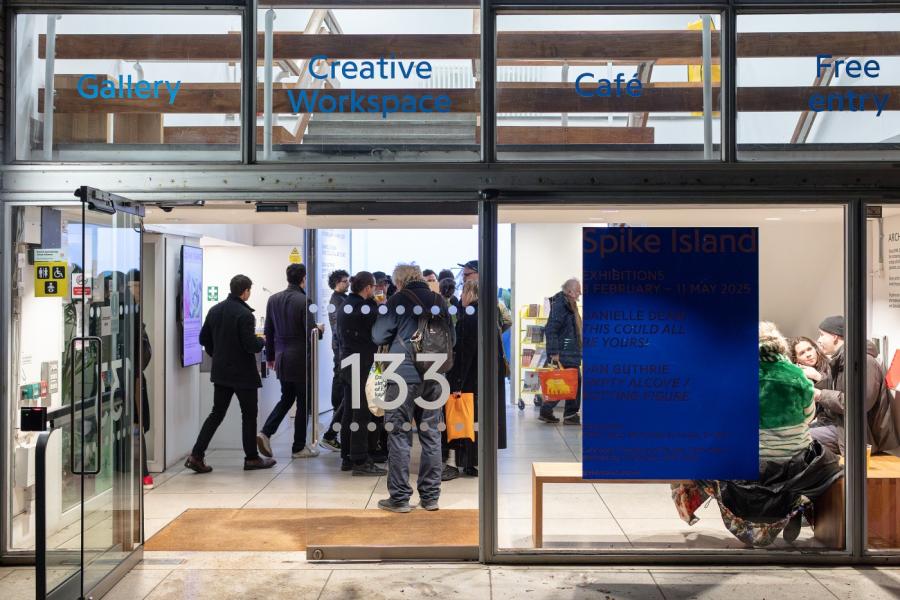
In 1976, Artspace Bristol first made its home in the industrial wasteland known as Spike Island, setting the scene for half a century of groundbreaking art and community creativity
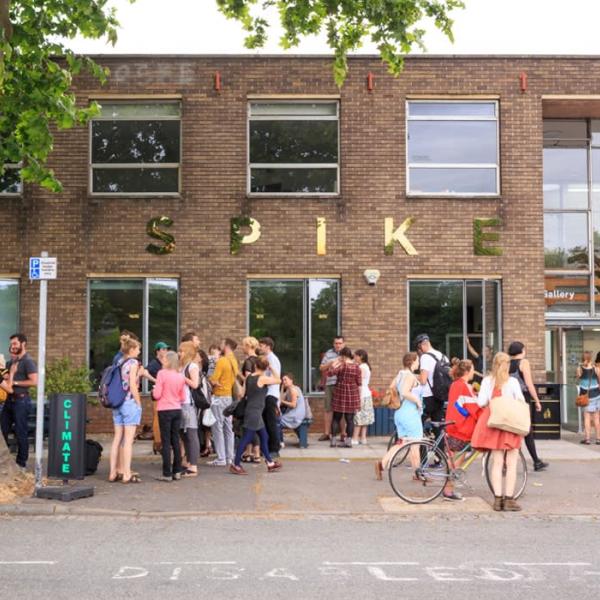
The concrete sprawl of the former Brooke Bond tea-packing factory sits along the banks of the River Avon, an industrial landmark nestled among the city’s harbourside, a site buffeted – like so many others – by the winds of high-end development. To the casual passerby, Spike Island is a gallery space. For those stepping inside its labyrinthine corridors and studios, it’s a site of unabashed creativity; an 80,000-square-foot former factory space where the air smells less like the tea packed there from the 1960s to the 1990s and more of fresh plaster, ink, paint and welding sparks.
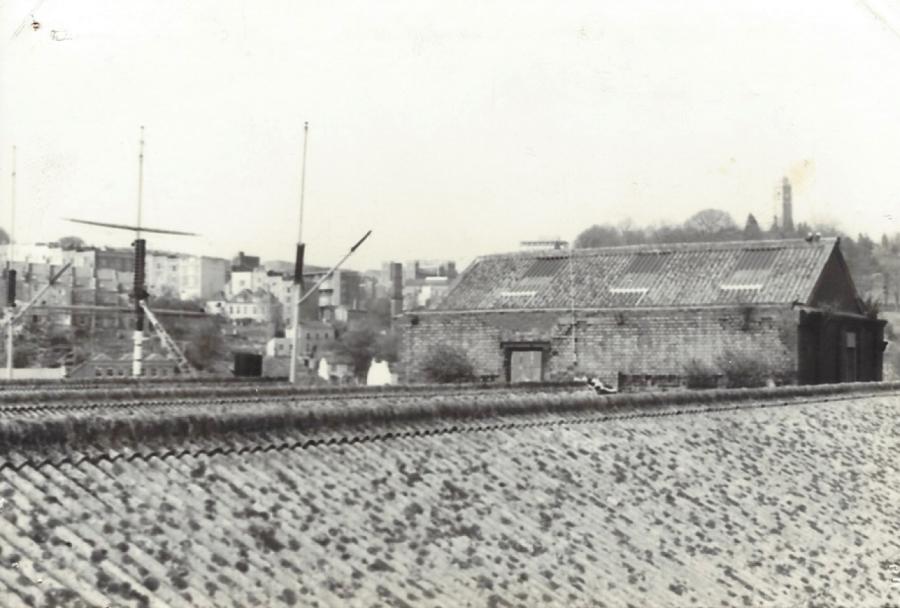
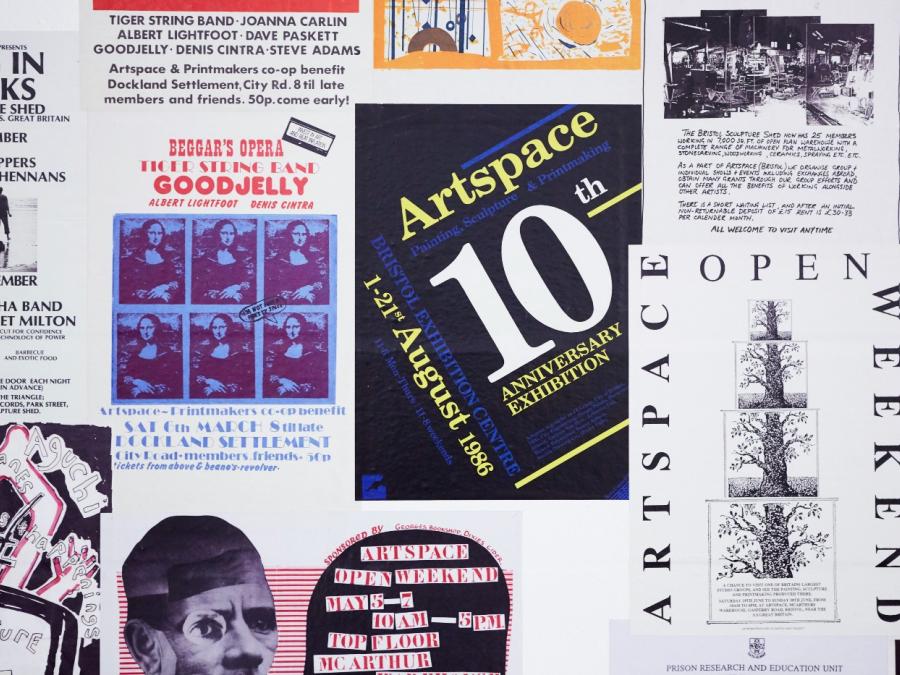
It’s 50 years since the establishment of what is now known as Spike Island. Established in 1976 by a collective of painters, sculptors and printmakers, Artspace Bristol sought out and administered affordable studio spaces for artists in Bristol at a time when the city’s creative talent was navigating a lack of established cultural infrastructure. Its vibrant DIY art scene paved the way for Spike Island’s predecessor at the former McArthur’s steel and metal warehouse on Gas Ferry Road – a site brimming with unique character.
“It was a bit of a shanty town,” notes sculptor and longtime resident Seamus Staunton, who recalls brutal winters that saw toilets frozen over beneath its corrugated asbestos roof. “There was a print workshop. There was the Avon Touring Theatre Company, who had a small space there, and the rest was a mixture of artists, painters and sculptors.”
“It was raw and it was cheap, but the community was the most important thing,” fellow sculptor Rodney Harris adds. “It was that collective ability to transform a place, which is what happened with the building we’re in today.”
Emboldened by an infectious can-do spirit, the artists occupied the disused Victorian warehouse until 1989, when increased rents and a proposed re-development of the site forced them to move on. Bolstered by public support, they lobbied the council to secure a new home in one of the city’s many empty dockside buildings. Having lain dormant for several years, the former Brooke Bond warehouse became the group’s new logical home, and in 1992, with a substantial lottery grant in hand, the artists set about stripping the site back to a blank canvas. In 1998, Artspace underwent a name change and Spike Island, as we know it today, was born – a nod to the industrial environs from which it was forged, rather than the legendary Stone Roses concert.
“The cost of it would have been phenomenal if you’d asked a company to quote to do a building like this,” Harris observes. “I mean, it’s still not finished. You’ve still got old doors that were temporary 20 years ago, but we don’t mind that.”
Though still technically a work in progress, the building itself remains an architectural marvel – a concrete fortress designed to withstand the heavy machinery of the tea trade.
“We had an architect friend visit us and he described it as ‘brave’,” Harris enthuses. “The architecture of the 1950s and 1960s was about a brave new world… A factory building in central Bristol for Brooke Bond Tea, you would have thought, would just be rather boring, but it’s actually really amazing.”
There’s a poetic continuity, of sorts, in the building’s transformation into an artistic hub. A 2012 project by former Spike Island resident and Bristol-based artist Rebecca Swindell saw her contacting more than 80 ex-Brooke Bond employees, who recounted tales of staff making tea-bag wedding dresses for employees who were due to be married. Today, the top-floor studios are even designed to mimic giant, scaled-up tea chests.
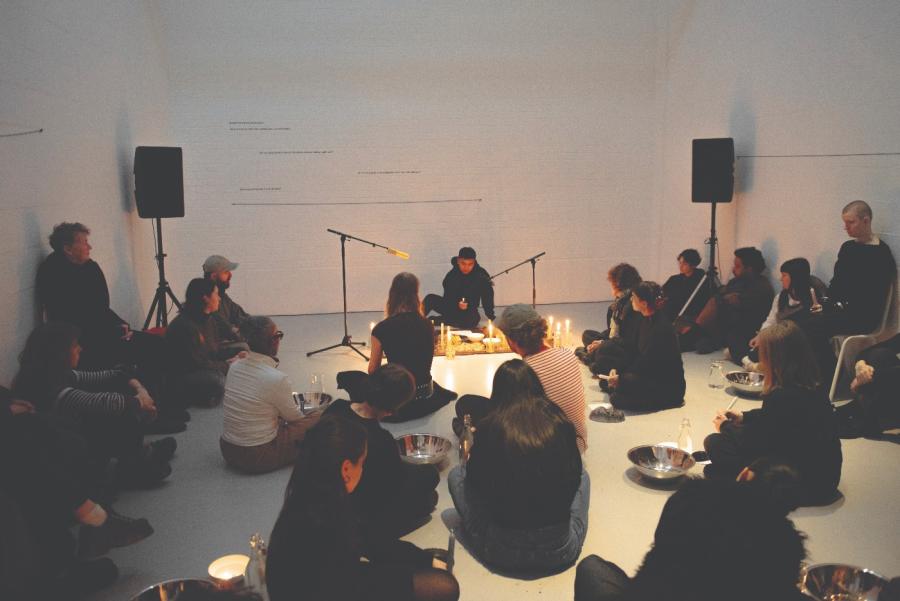
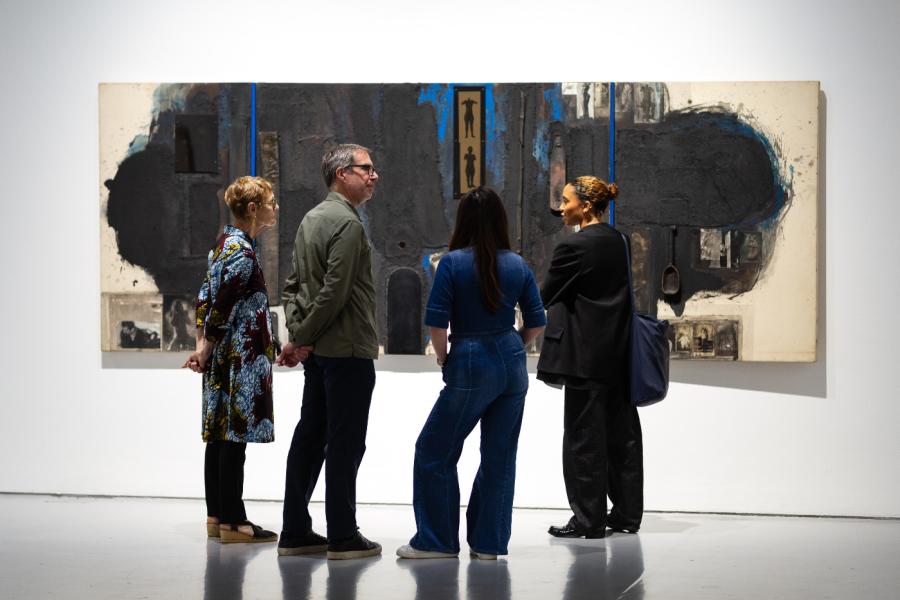
Though perhaps best known by the public for its gallery spaces, Spike Island’s emphasis on commissioning new work helps set it apart from its contemporaries.
“Within the city, we are the only institution that commissions new work in the visual arts,” explains deputy director Kate Ward. “We’ll spend weeks with the artist reimagining things, working out how to do something, problem-solving and then having to rethink it completely because it doesn’t work.”
Whether it’s scouring Wales to find wonky rocks that can stand upright or vacuum-wrapping a graveyard of discarded shopping trolleys, the team will always find a solution. Ward recalls the technical anxiety behind 2024’s Grey Unpleasant Land, a collaborative commission from artists Sophia Al-Maria and Lydia Ourahmane.
“I remember a conversation where we were really worried about a mattress that had been dragged in – whether it was flame-retardant, and whether it might have any infestations in it before we shrink-wrapped it. But we ended up with the most incredible silver shrink-wrapped sculptures of this old, unwanted refuse.”
An eagerness to engage with the brilliant and the bizarre defines Spike Island’s internal culture – something the team is eager to share with Bristol as a whole throughout its 50th year and beyond.
“Spike is often seen as quite insular,” Ward observes. “It’s got so many things happening under one roof and finding the resources to look more outwardly is tricky, but that’s something we’re really keen to do – to work with artists who want to work with other cultural producers in Bristol.”
Given the current site’s eclectic history, it’s little surprise that the DNA of previous Spike Island residents is embedded in the building’s fabric. In the sculpture studios, Richard Long, a pioneer of land art, left his mark literally, practicing the consistency of his Avon-mud drawings with handprints that remain by a sink to this day. Nearby, the colour palette of Simon Thomas is still visible on the studio walls, carefully painted around by successive generations of artists.
In the late 1970s, a poster appeared around the city issuing a defiant missive: ‘Artist? Don’t Leave Bristol’ – a reaction to a creative exodus driven by a lack of affordable space. With the city’s harbourside transforming into a landscape of premium apartments, that manifesto feels more relevant than ever and Spike Island remains one of Bristol’s most significant bulwarks against the gentrification of the city’s creative spirit.
At £6 per square foot, the studio rents are among the lowest in the city, and demand is high, with 24-hour access to kilns, metal workshops and resin rooms. Meanwhile, for as little as £13 a month, artists and makers can access a professional development network that offers shared use of communal workspaces and equipment. As it has from its inception, Bristol Printmakers offers an open-plan space where members can freely use printing presses and other equipment.
Spike Island’s 50th celebrations begin in earnest in May 2026 with Open Studios 50, a milestone edition of the signature event offering behind-the-scenes access to over 70 resident artists. The inaugural Spike Print Fair pays tribute to Artspace’s printmaking legacy in July, while September’s Summer Party Fundraiser honours five decades of community spirit, while raising funds for the future. Festivities conclude in December with the Made at Spike Winter Fair, an invitation to meet the makers and purchase their work direct from the studios
Communications officer Ed Holland sees this anniversary as a moment to renew Spike Island’s commitment to both the city itself and its artistic community.
“One of my favourite words that we used t describe Spike, when we were looking at defining ourselves, was ‘generous’,” he posits. “Being able to say, ‘Here’s an exhibition of stuff you won’t have seen before – for free.’ You don’t have to ‘get’ it, you don’t have to love it, you don’t have to take it with you, but it’s there for free, and it’s here for you.”