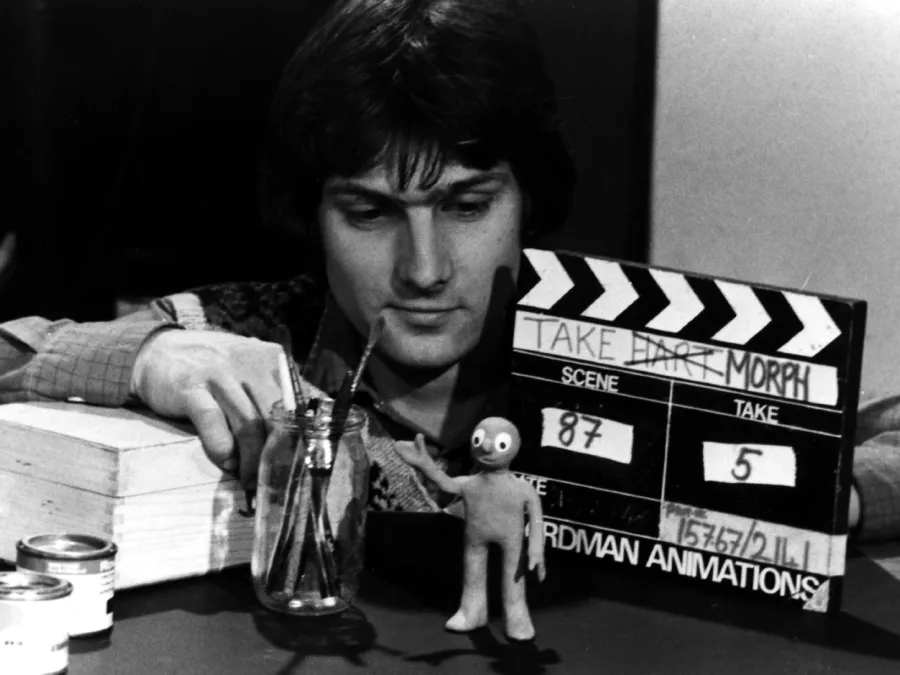
In 1972, two teenagers registered a name with Companies House as a joke. Five decades later, Aardman is a global powerhouse of stop-motion, but its soul remains firmly rooted in the DIY radicalism of 1970s Bristol. As the studio prepares to celebrate its 50th anniversary with a retrospective exhibition at M Shed and a showcase of rarely seen early material as part of Cinema Rediscovered, co-founder David Sproxton reflects on their humble beginnings.
Aardman’s name came about as a teenage in-joke with co-founder Peter Lord. Did you ever anticipate it would endure like it has?
It’s weird, isn’t it? It came out of ‘aardvark’ with all these ‘a’s. You could register a corporate name with Companies House for something like three and sixpence in those days, which we thought was a laugh. You got this piece of paper with a company name on it, so we registered ‘Aardman Animations’ when we were still at school. When we were doing lots of TV commercials, it became such a clumsy thing to have to say over the phone, so we spent a couple of days thinking, “Should we change it?” After about three days, we thought, “Sod this for a game of soldiers, we’ll just stay with Aardman.”
Was the house style we’ve come to know and love born from technical necessity rather than aesthetic choice?
It’s a bit of each. The house style people refer to is probably more the Wallace and Gromit look that Nick Park brought in when he joined in 1985. It developed into something more elegant after A Grand Day Out, if you can call Wallace elegant… Pete’s style was a bit more figurative and realistic. If you look at the Channel 4 work, that was very much caricature, rather than the stylisation Nick brought to the party. We were also driven by ad agencies wanting a particular look. So there was quite a wide range of styles – things like the Cuprinol Man. We designed the character, but it had to fall into their world.
What did Morph’s simplicity teach you about animation?
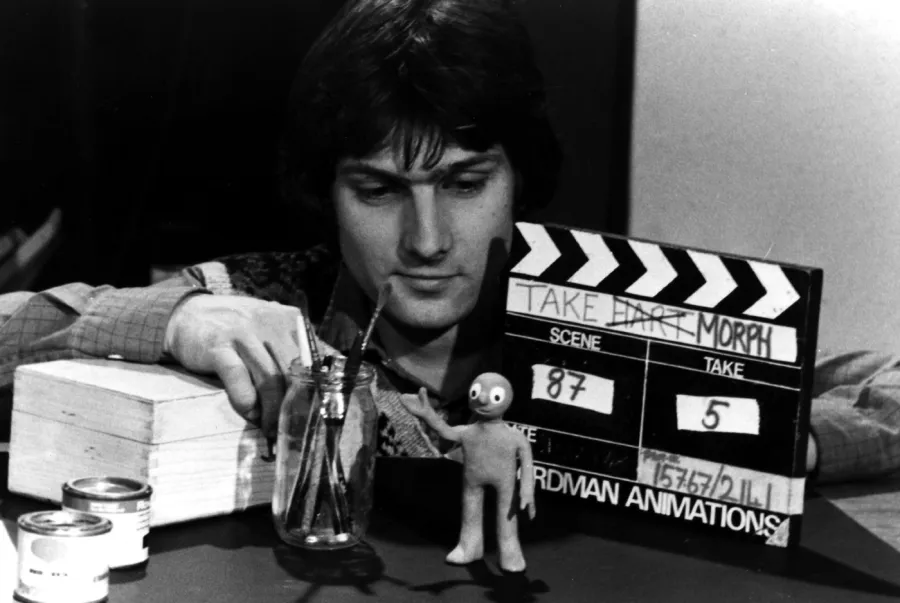
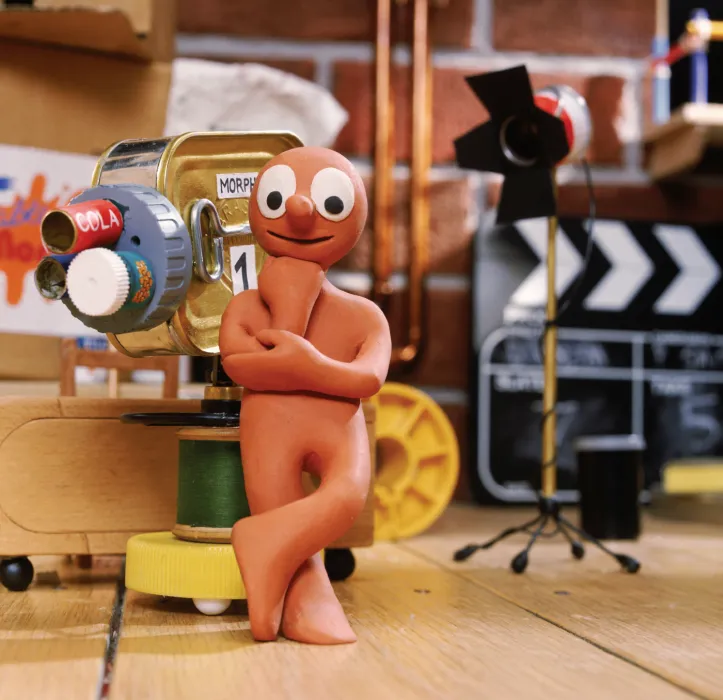
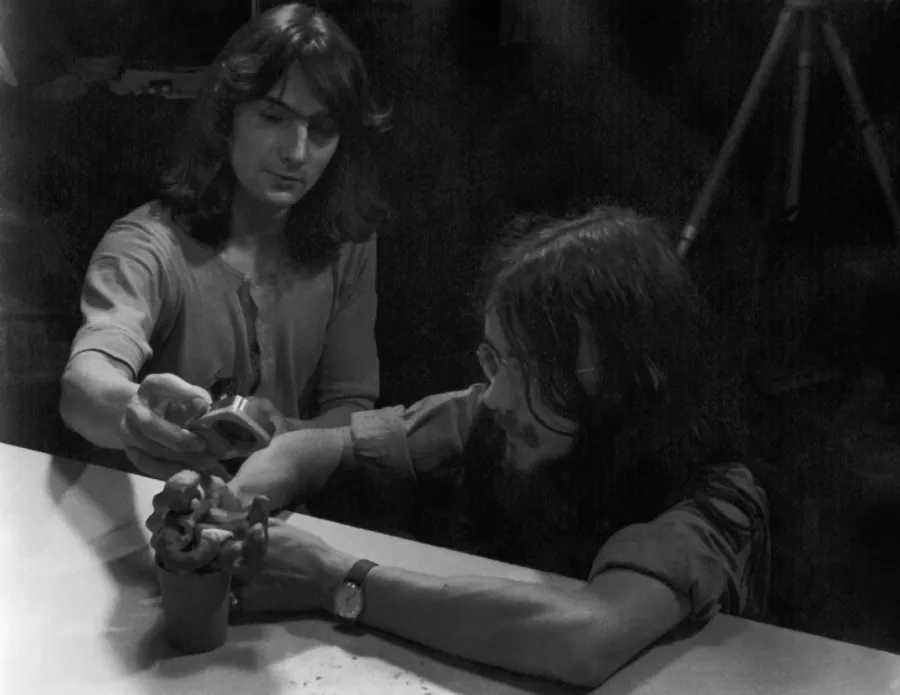
Morph was just a ball of plasticine – no armature, no skeleton. Pete did the bulk of the animation, and part of his skill was constantly having to re-sculpt the character because, as you’re animating, it deforms. That lack of an armature meant it was incredibly flexible. Pete’s take was that the body language was infinite. What we found with clay is that you can tweak it in very fine increments and get such subtlety in the expression.
At one point, we thought there must be a quicker way of getting the rough format. We ended up making an aluminum mould using an American type of clay that had a different consistency, so you could melt it and pour it into a mould. The problem was it didn’t retain its subtleness and tended to break, so that put an end to cranking out basic Morphs quite quickly. But Pete can literally make Morphs, more or less, in his sleep.
You mentioned the Channel 4 shorts. Babylon, which is being shown at Cinema Rediscovered along with the rest of the Sweet Disaster series, is much darker than Aardman’s modern-day output. Did it feel radical at the time?
You can’t underestimate the importance of Channel 4 for the British animation industry. We fell in with Dave Hopkins, a quite radical left-wing writer, who proposed a series called Sweet Disaster around the theme of the nuclear threat and global power. Babylon was very much an anti-arms film. That was why Nick Park joined us, of course. There were dozens of characters in it and we needed more animators. The deal was: “Bring your camera and set with you, we’ll pay you to work on Babylon, and we’ll help you finish A Grand Day Out.” It’s an interesting series to watch back. It had a profound impact.
Cinema Rediscovered is also showing the doc, Peter Gabriel: Sledgehammer Revealed. What do you remember most about the Sledgehammer shoot?
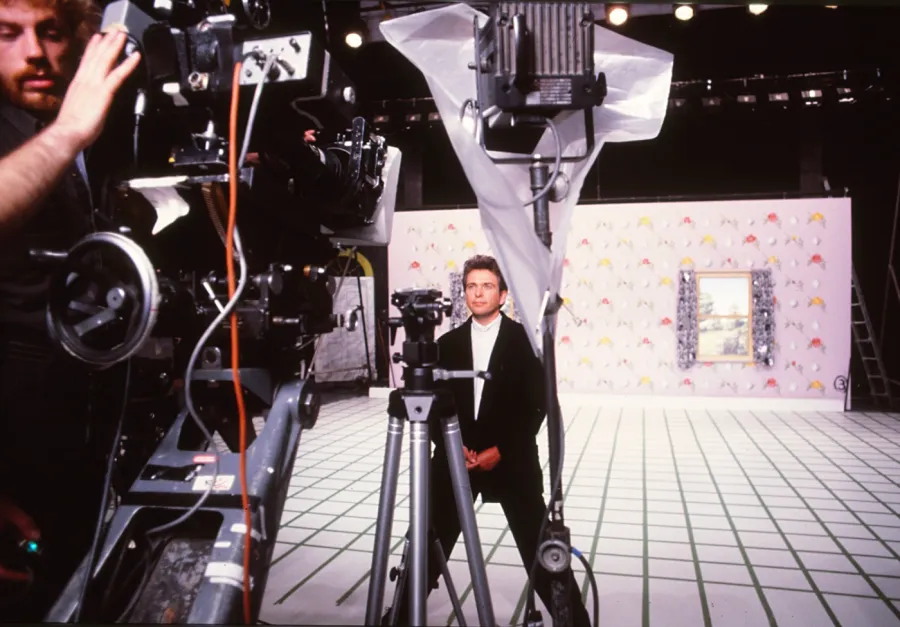
We literally had one week to shoot it, which was bonkers – trying to do a three-and-a-half-minute animated film in a week. If we got six hours of sleep a night, it was a good night. We finished at four o’clock on a Sunday morning, it went into the edit Monday, and it was on Top of the Pops on Thursday. That’s what gives it that lovely rough edge. There wasn’t time to say, “That’s not quite good enough, let’s shoot again.” Stephen Johnson, the director, wanted a grungy look. For the dancing chickens, he said, “No, just go down to the supermarket and get some real chickens.” Then there was the ice head. We only had two cast heads because they took four days to freeze. One wasn’t fully formed, so we essentially had one take to get it right. You were flying by the seat of your pants.
How much does Bristol’s creative energy still play a part in Aardman’s DNA?
Bristol has always had radical politics… It’s far enough from London not to feel the full gravitational effect. In the early days, agency people enjoyed coming down because it was a day out. In the 70s, Bristol was sometimes called the “graveyard of ambition” because it was too comfortable, but that has changed. Bristol is the right size for a city. You can walk across the heart of it in 45 minutes. It makes it easy to meet your tribe. I remember Dick Penny setting up ‘First Fridays’ at Watershed, and you’d have people from Rolls Royce, the BBC and the universities all at one table. In London, that would be really hard to get together.
Is there a way of working from 1976 that remains to this day?
The fundamental skill of moving a model frame-by-frame is unchanged. But I think it’s the thinking time. With film, you had to be so precise. With 35mm, it was one pound a second in the 1990s. That process gave you miniature moments of reflection to think, “Is this absolutely the right cut?” There’s a danger with digital technology being so swift that it doesn’t give you those moments. When you’re lacing up a film camera, it’s a palaver, so you want to make sure everything is right before you hit that button. We still try to keep that preciousness – being that precise – at the back of our minds.
Cinema Rediscovered runs 22-26 July at Watershed. Cracking Exhibition, Gromit! runs from 20 June to 13 September at M Shed