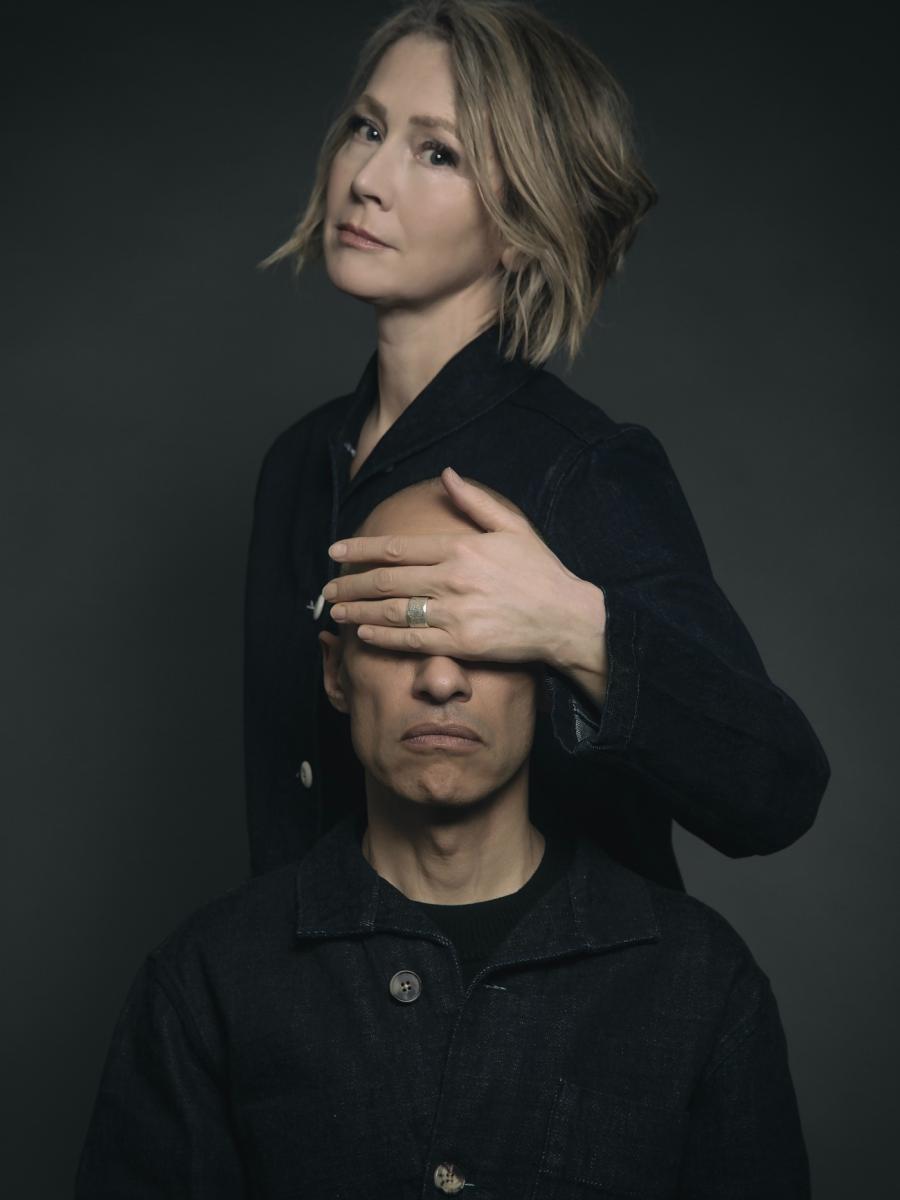
We catch up with former Lamb singer Lou Rhodes and her partner in Kiiōtō, Rohan Heath, as they prepare to release their new album, Black Salt
Lou Rhodes: I moved to Bradford-on-Avon in late 2006 when my sons were young. We’d been living in a community in an old recording studio in Sussex and found a similar setup in the southwest that was a little more our own. I’d always been drawn to the Wiltshire countryside, to the rolling valleys and ancient trees. Ro joined me shortly after lockdown, when we got together.
My memories of festivals here, particularly of Glastonbury, were one of the things that drew me to the area. I recall some of Lamb’s appearances on the Jazz World Stage in the 1990s, and how magic the atmosphere was. Rohan also has fond memories of that stage, where he performed with the poet Lemn Sissay. There’s something unquantifiable about the land here, something you feel that’s hard to explain. I remember driving back to London in a blissed-out state, through Wiltshire and Somerset, dreaming of putting down roots here one day.
Rohan Heath: The southwest, especially Wiltshire, was key to the creation of Kiiōtō. It was in Bradford-on-Avon that we started writing our first album, As Dust We Rise. Many of the songs began in Lou’s kitchen after walking the fields and woods, with me at the piano and Lou singing while cooking. We didn’t plan to make music when we got together, but it just started to flow and there was little we could do to stop it.
It’s funny you should link the vibe of our new album, Black Salt, to the flow of a river. For all my life, I’ve been drawn to rivers. Indeed, for months after my mother died, I turned to the riverbank to work through my grief – specifically to the banks and watermeadows of the Avon, Ebble, Wylye and Nadder. At times, it was as though I was in dialogue with the sound of these rivers, looking for answers in their flowing voices. These voices informed melodies; without rivers, there would be no Kiiōtō.
Lou: My mum was a folk singer, so I learned a lot of the songs almost before I could talk. I suppose the ritual and tradition running through folk is in my blood. In Kiiōtō, this has fused with rituals and traditions from Rohan’s heritage, including those relating to the African diaspora. We dug deeper into this on our debut album, in songs like Spanish Moss and Quilt, and on our new album. In the song Lost Map, we explore the results of DNA tests we both took, and the impact of these on our understanding of who we are.
Our first album took its cue from our travels in the American South, but Black Salt brought us home again and was written between Wiltshire and London. There’s a sense of us exploring more deeply what it is to be human. Warpaint speaks of the challenges of being female in a male-dominated world, White Noise decries the hold technology has over us, and Little Axe relates to raising boys in an urban environment.
Rohan: Our song Zero Gravity was inspired by Samantha Harvey’s extraordinary, Booker Prize-winning novel Orbital, a book that invites us to reconsider our fragile planet and the human race from the vantage point of space. We contacted Samantha and were overjoyed when she said she loved the song.
From the silent, powerful landmarks of Stonehenge and Salisbury Cathedral, to the vibrant pulse of Bristol, the region provides inspiration at every turn. Listen carefully, and you’ll hear its rhythm woven into the foundation of Kiiōtō’s music.
Black Salt by Kiiōtō is available now
@we_are_kiioto
kiioto.com
