Amen, brother: why drum ’n’ bass is such a Bristol thing
As the southwest prepares to vibrate with low-end all summer, Beth Burton examines why drum ’n’ bass is such a Bristol thing
As it has for most kids growing up in Bristol and the southwest, drum ’n’ bass has been part of my life for as long as I can remember. At 15, I went to my first proper rave – Kronic Bass at Lakota, one of Bristol’s iconic under-18s events. Living here, the sound was impossible to avoid, leaking out of cars at traffic lights, rattling through open windows in summer, and spilling into parks, side streets and warehouses across the city.
In Bristol, drum ’n’ bass is less a genre than part of the atmosphere. Its relationship with bass culture stretches back well before jungle and drum ’n’ bass emerged in the early 1990s. Bristol already had a deep underground culture, built around reggae and dub sound systems, pirate radio and DIY parties, particularly in St Pauls. Shaped by generations of migration, especially through its African Caribbean communities, the city had already developed an identity rooted in bass by the time DJs and producers began pilfering that break from The Winstons’ Amen Brother.
This legacy runs through St Pauls Carnival, which returns in early July. Founded in 1968 by Bristol’s African Caribbean community, the carnival, along with venues like the Bamboo Club, embedded soundsystem culture into the fabric of the city. And when jungle – the chaotic early blueprint for drum ’n’ bass – arrived, the city twisted it into something of its own: darker, heavier, more dub-driven. It carried more space, more reggae weight, more unpredictability, before jungle evolved into the more precision-engineered sound of drum ’n’ bass. DJ Krust, Roni Size, DJ Die and Suv pushed this new genre deep into new territory with Full Cycle Records and Reprazent, whose 1997 album New Forms is one of the genre’s defining releases
“It’s an attitude, it’s a mindset. It’s not the music.”
Bristol’s influence never just came from studios or clubs. It came from the city itself. “The Bristol sound is culture,” Krust, now known as K, tells me. “It’s an attitude, it’s a mindset. It’s not the music.” Part of this came from how physically close everyone was: graffiti artists, punks, reggae selectors, ravers, B-boys and jazz musicians all shared the same spaces, went to the same parties. “I lived on the same street as Smith & Mighty, up the road was DJ Die, across the road was [hardcore and rave pioneer] Easygroove,” K recalls.
Ideas travelled quickly. Punk’s DIY mentality collided with soundsystem culture, pirate radio, hip-hop and a nascent rave scene, creating the perfect conditions for new hybrid genres to form. In venues like Lakota and the Malcolm X Centre, promoters, DJs and collectives built a scene that moved fluidly between clubs, backrooms and free parties, with drum ’n’ bass and trip-hop emerging from the same restless, collaborative underground culture. Part of this history is captured in This Is Jungle Takeover, a small exhibition at RWA until 28 June, put together by Gary Thompson, brother of K.
“Hip-hop taught me, you just build,” K says. “If there isn’t a way, you make a way.” It’s an energy that prevails. Despite gentrification, rising costs and growing pressures on nightlife, the city remains fiercely protective of its underground bass culture. House parties spill into afters, warehouses become rave spaces, and collectives continue throwing nights across the city. People here are more interested in building scenes than waiting for permission"
“it was the music that attracted you, but it’s the culture that makes you stay.”
Bristol quite literally became a moving rave recently when Dom Whiting rolled through the city with his travelling sound system, his portable rigs blasting strictly drum ’n’ bass – part carnival parade, part free party, part love letter to the city’s bass culture. It was symbolic, too, of how drum ’n’ bass won’t be contained to clubs. As you’ll discover over the summer, when the sound becomes inescapable, it lives in fields and amphitheatres, warehouses and woodland, carried by the feeling that a rave could start almost anywhere. “If you come to a jungle night, in Bristol,” K says, “it was the music that attracted you, but it’s the culture that makes you stay.”
Credits:
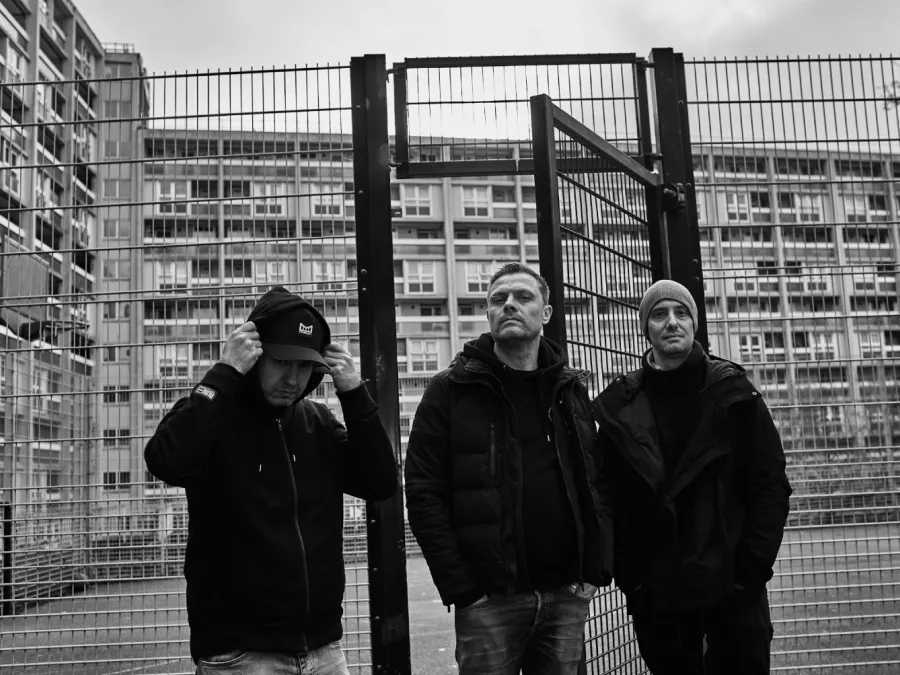
DNB Group - D*Mind | Photo by Hacker
Full Cycle Record Crew | Photo by Hacker